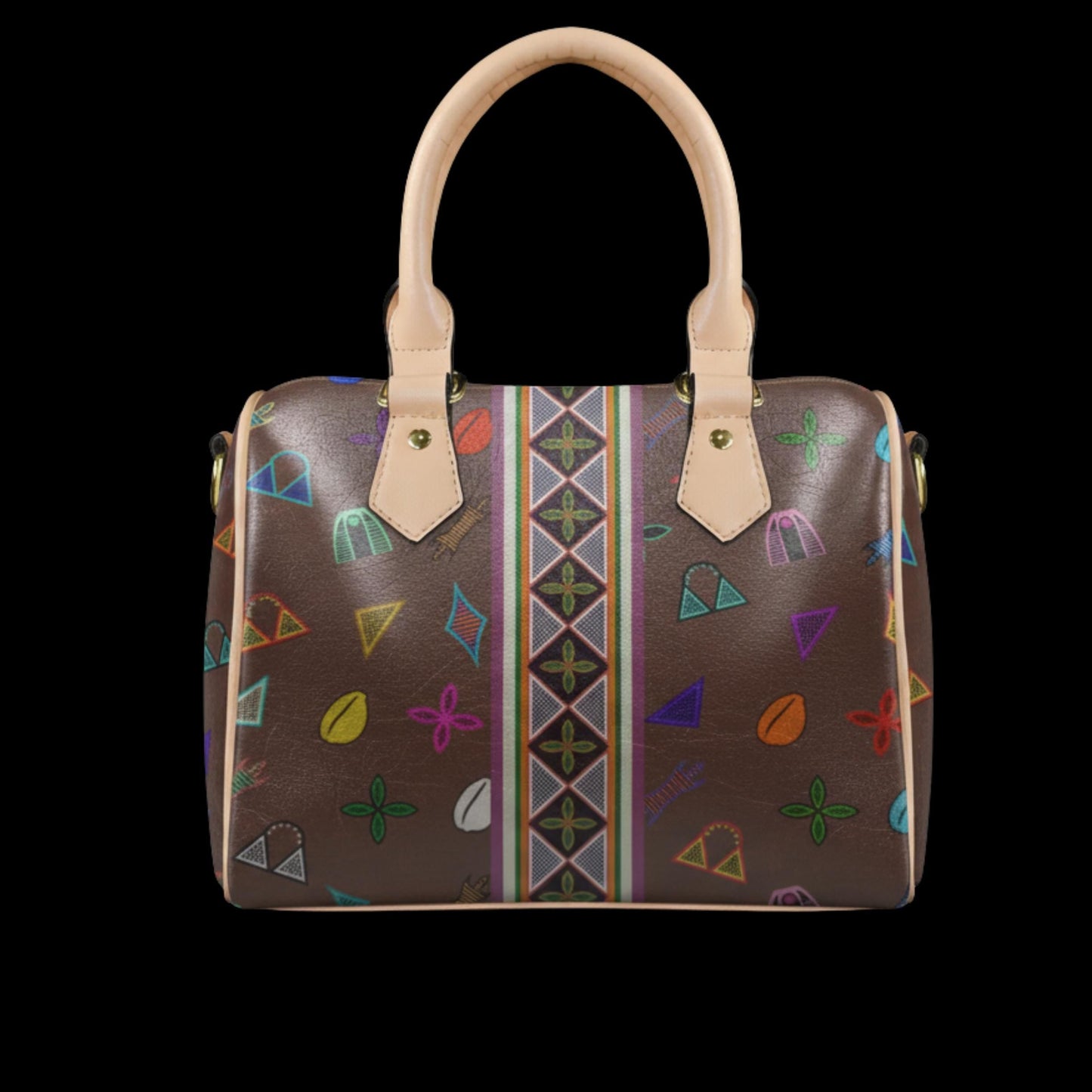
*Toghu SHAPES Motif Glossary
- Nchainka (Crosshatch Motif)
A woven crosshatch pattern symbolizing unity, resilience, and collective strength within the community. Its interlocking structure reflects how individuals are bound together in shared purpose. - ‘X’ and ‘H’ Symbols
Geometric forms representing wealth, authority, fertility, and prosperity. These shapes often appear in royal or ceremonial garments, reinforcing status and abundance. - Double Gong (Palace Gong)
A traditional emblem of royal communication and authority. Historically associated with palace messengers, it signifies announcements, leadership, and the voice of governance. - Cup / Chalice Motif
Symbolizes spiritual truth, shared wisdom, and unity among families and villages. It reflects communal gathering, ceremony, and the passing down of tradition. - Lizard / Gecko Motif
A symbol of protection, adaptability, and renewal. Inspired by the lizard’s ability to shed and regenerate, it represents new beginnings and resilience. In some ancestral contexts, stylized lizard forms are also associated with twin lineage and continuity of life. - Star Motif
Represents knowledge, guidance, goodness, and truth — a symbol of clarity and higher purpose. -
Cowrie Shell Motif
A symbol of wealth, protection, and prosperity. Historically used as currency, the cowrie represents abundance, feminine power, and a deep connection to ancestral heritage.